Why Does Kabbalah Use the Mother's Name? The Meaning Behind "Son or Daughter of"
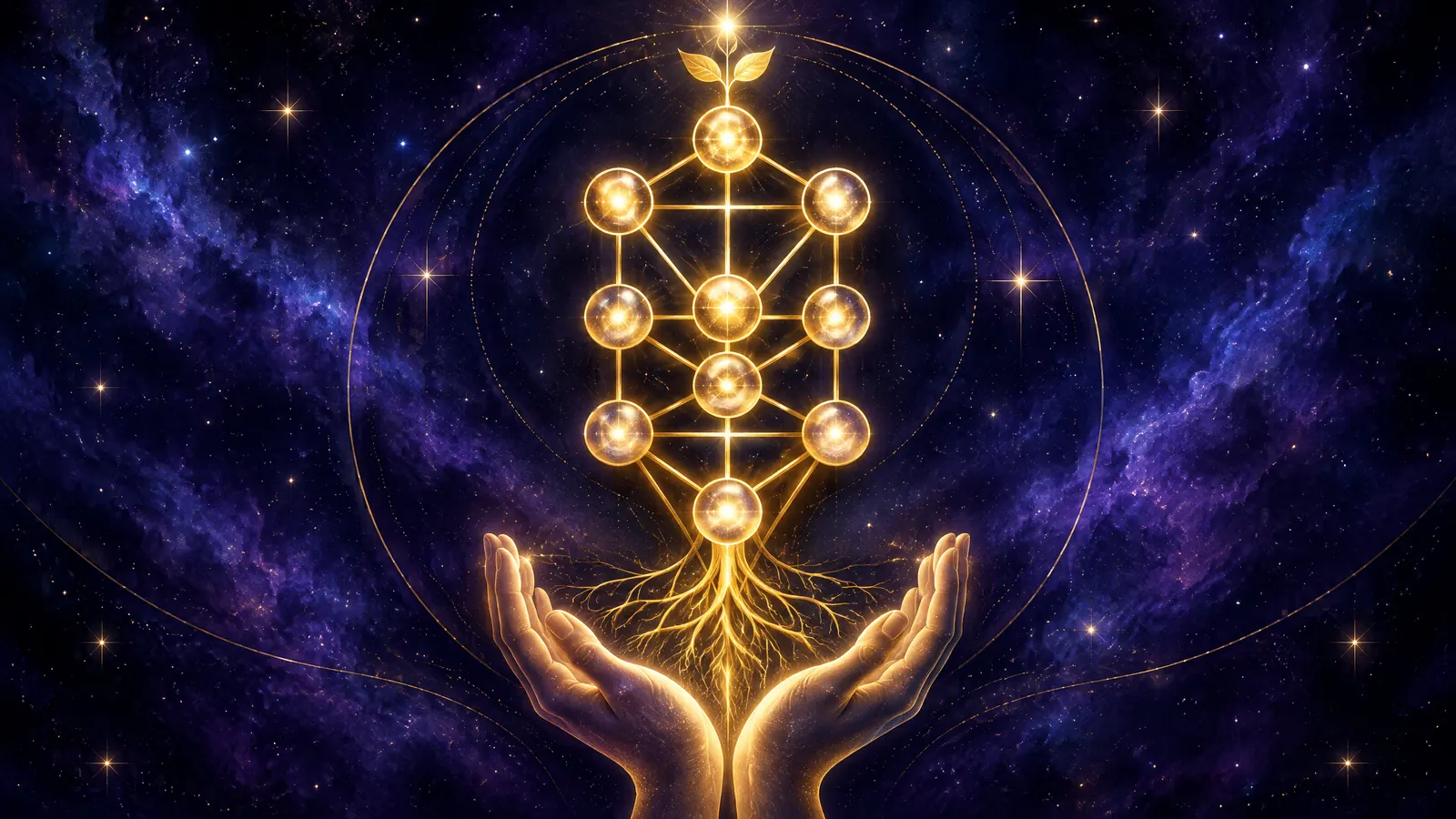
We ask for your mother's first name because Jewish tradition, and Kabbalah after it, identifies a person in prayers for healing as "[name] son of" or "daughter of" their mother. Estrella follows this idea: your mother's name adds a layer of "roots" to your map. Only her first name is needed, and it is used only to create your map.
Why does Jewish prayer use the mother's name?
In Jewish prayers for someone who is ill, the person is named with their mother's name, for example "Moshe ben Sarah" (Moshe son of Sarah) or "Leah bat Rivka" (Leah daughter of Rivka). This custom is widely observed across Jewish communities and is best known from the Mi Sheberach prayer for healing.
Ben means "son of" and bat means "daughter of" in Hebrew. The Mi Shebeirach article on Wikipedia describes how the healing prayer is recited in synagogue, often during the Torah reading, with the names of those in need.
It is worth knowing that the father's name is also used in Jewish life, just in different settings. When a man is called up to the Torah, or in a marriage contract (ketubah), the custom is to use the father's name. The mother's name belongs especially to moments of prayer and requests for mercy.
Why is the mother's line emphasized?
Several reasons are given in Jewish sources, and they tend to sit side by side rather than compete. Here are the ones most often mentioned:
- A verse from Psalms. In Psalm 116:16, King David prays, "I am your servant, the son of your handmaid." He appeals to God through his mother, and many explain that the custom follows his example.
- A Talmudic teaching. The Talmud (Shabbat 66b) records the sage Abaye saying that his mother taught him to use the mother's name in certain recitations. Later authorities saw this as support for the practice.
- Mercy and closeness. A mother is often described as a symbol of compassion and of the most immediate bond a person has. Calling on that bond is felt to suit a prayer for mercy.
- Certainty of the mother. A traditional explanation notes that a person's mother is always known with certainty, which makes her name a clear identifier.
- Descent through the mother. In traditional Jewish law, Jewish identity passes through the mother, a principle described in the Wikipedia overview of matrilineality in Judaism.
These are traditional explanations rather than one official rule. Different teachers emphasize different reasons, and families may follow their own customs.
How does Kabbalah read a name with the mother's name?
Kabbalah sees a Hebrew name as carrying spiritual qualities through its letters and their number values. Reading a name alongside the mother's name treats the person as part of a lineage rather than an isolated individual: who you are, and where you come from.
Here it is important to separate two things. The use of the mother's name in prayer is long-standing Jewish practice. The use of the name plus the mother's name in personal name readings is a more modern, popular practice inspired by Kabbalah, offered by many teachers and readers today. Estrella belongs to the second category. We draw on the tradition with respect, but we are not a religious authority, and a soul map is not a prayer or a substitute for one.
If you want to understand the letter values behind these readings, our guide to gematria name numerology shows the full Hebrew table and a worked example.
How does Estrella use your mother's name?
In your Estrella soul map, your mother's first name forms a layer we call "roots". It sits next to your own name, your birth date and your birth chart, and it adds a family dimension to the reading. Here is what it contributes:
| Part of the map | What it uses | What it reflects on |
|---|---|---|
| Your name | Your own first name | Personal qualities and the numbers of your name |
| Roots | Your mother's first name | The line you come from and inherited themes |
| Birth date | Day, month and year | Life path and core numbers |
| Birth chart | Date, time (if known) and place | Astrology, Human Design and Gene Keys |
In practice, the roots layer appears most in the "family and roots" section of the full map, and it also colors how we read themes like belonging, home and what you carry forward. The letters of your mother's name are counted with the same methods used for your own name, and the two are read together.
The tone is reflective. It is not a judgment about your mother or your relationship with her, and it does not predict anything about your family's health or future.
You can see how this works for yourself: create your free soul map in a few questions.
Is it safe to share my mother's name?
Yes, and here is exactly what we ask for and why. We only need your mother's first name, not her surname, birth date or any other detail about her. Her name is used only to create your soul map.
A few points many people find reassuring:
- Only the first name. A first name on its own is part of the reading, not an identifier for an account.
- Used for one purpose. Your details, including your mother's name, are used only to create your map.
- No guessing required. If you are not sure of the spelling, give the version you know best. We will read the name as you wrote it.
What if I do not know my mother's name, or prefer not to share it?
Many people were adopted, raised by someone else, or simply have a complicated story. You can use the name of the woman who raised you, which many readers feel reflects the "roots" layer just as truly. If you would rather not share a mother's name at all, the rest of the map still works from your own name and birth data.
What if my mother's name is not Hebrew?
Most names are not Hebrew, and that is completely fine. For a reading, the name is transliterated into Hebrew letters based on how it sounds, then counted. Names like Grace, Abena or Marisol can all be written phonetically in Hebrew.
Spelling choices can change the number slightly, so we use a consistent method for both your name and your mother's name. If you only know your mother by a nickname, use the name she was usually called; tradition generally values the name a person is known by.
Start with your own roots
Your mother's name is one small part of a larger picture. The free first reading on the site takes a few questions: your name, your mother's first name, your birth date, your birth time if you know it, and your birthplace. The full soul map is a personal PDF of 20+ pages, delivered on WhatsApp, covering love and relationships, work and purpose, family and roots, personal growth, the year ahead and the numbers of your name. If you are curious, begin your free soul map. It is for self-reflection, not professional advice. You can also read more about what a soul map is first.
FAQ
Why do you need my mother's name for a soul map?
Following a Jewish custom that names a person as "son of" or "daughter of" their mother in prayer, Estrella reads your mother's first name as a "roots" layer of your map. Only her first name is needed, and it is used only to create your map.
Is using the mother's name a Jewish religious requirement?
In prayers for healing, such as the Mi Sheberach, it is a well-established custom to name the person with their mother's name. Using the mother's name in personal name readings is a separate, modern practice inspired by Kabbalah, not a religious requirement.
Why is the father's name used sometimes instead?
In Jewish practice the father's name is used in settings such as being called to the Torah or in a marriage contract. The mother's name is used especially in prayers for mercy and healing, following verses such as Psalm 116:16.
Can I use my grandmother's or stepmother's name?
Yes. If you were raised by someone other than your birth mother, many readers feel the name of the woman who raised you reflects your roots meaningfully. Use the name that feels truest to your story.
Do I need to be Jewish to get a Kabbalah-inspired reading?
No. Estrella's soul maps are for people of any background who are curious about these traditions. We draw on Jewish and Kabbalistic ideas with respect, without presenting the reading as a religious practice.
Keep reading
Gematria Name Numerology – How Hebrew Letters Turn Your Name into Numbers
Learn gematria name numerology with all 22 Hebrew letter values, a worked name example and the Pythagorean comparison. Find your name's number.
What Is a Soul Map? A Plain-English Guide to Soul Map Readings
Learn what a soul map is, which five traditions it draws on, and what a soul map reading covers. Start with a free first reading in a few questions.
How to Calculate Your Life Path Number: Step-by-Step Guide and Calculator
Learn how to calculate your life path number step by step, with a worked example, a free calculator and an honest note on master numbers 11, 22 and 33.
For self-reflection and personal growth only: not a prediction, a promise or professional advice. Maps and texts are created with AI.